
Guides
Business Loan vs. Line of Credit: How to Choose
Compare a business loan vs. line of credit by purpose, repayment behavior, cost, cash-flow fit, and preparation before partner review.
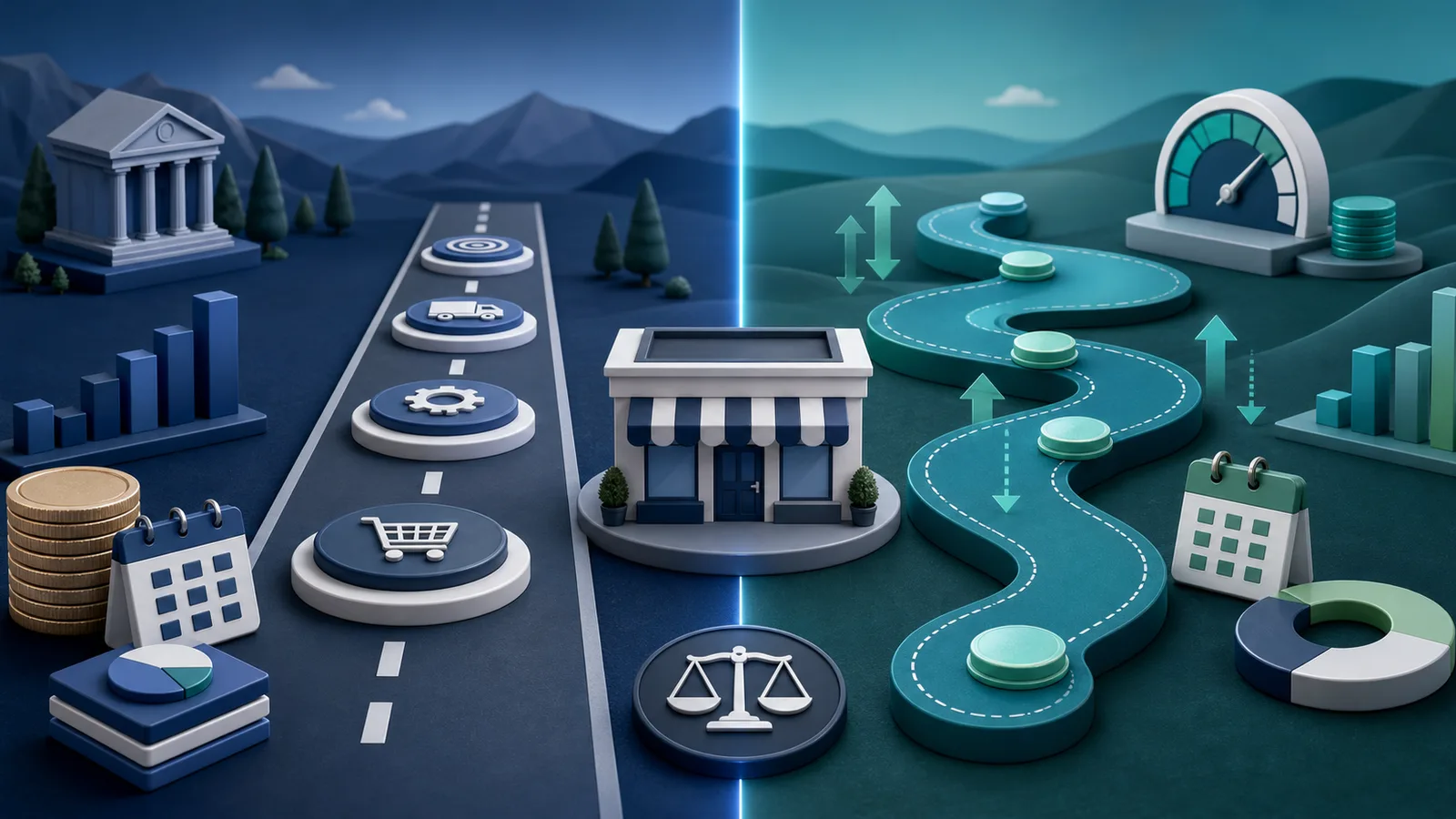
Business loans and business lines of credit can both provide access to capital, but they solve different problems. A loan is often built around one defined amount and a repayment schedule. A line of credit is usually built around access: you can draw funds when needed, repay, and potentially draw again depending on the terms.
This guide compares a business loan vs. line of credit so you can prepare better questions before applying or reviewing partner options. It is educational, not financial, tax, accounting, or legal advice. Naverica does not lend its own capital or make partner underwriting decisions.
Start with the business problem
The best place to begin is not with the product name. Start with the job the financing needs to do.
Ask:
- Is the need one-time, recurring, seasonal, or uncertain?
- Do you know the full amount required?
- How soon do you need access?
- How long will the benefit of the spending last?
- What cash flow will support repayment?
- Would flexibility matter more than a fixed schedule?
The U.S. Small Business Administration’s guide to funding your business notes that different funding sources can affect obligations, risk, and control. That is the right lens for this decision: choose the structure that fits the purpose, not just the one that sounds familiar.
How a business loan works
A business loan usually provides a set amount of funds at once. Repayment often happens on a defined schedule over a stated term, though details vary by provider, product, collateral, and borrower profile.
A business loan may be easier to evaluate when:
- You know the project cost.
- The need is one-time or planned.
- The expense has a useful life beyond the next few weeks.
- You want a clearer repayment schedule.
- You are funding equipment, renovation, expansion, inventory buildout, or refinancing.
The tradeoff is flexibility. Once the funds are disbursed, you usually do not keep reusing the same facility unless the loan includes a separate renewal or new application process. If you borrow more than needed, you may pay for unused cushion. If you borrow too little, the project may still be underfunded.
For SBA-guaranteed financing, the SBA’s loan program overview explains that participating lenders make and service loans while SBA guidelines help reduce lender risk. That path can involve specific documentation, eligibility review, permitted uses, and timing considerations.
How a business line of credit works
A business line of credit is generally designed for flexible access. Instead of receiving one lump sum for one defined project, you may receive access to a credit limit. You can draw what you need, repay, and potentially reuse available credit depending on the agreement.
A line of credit may be easier to evaluate when:
- The amount needed is uncertain.
- The need may happen more than once.
- Cash flow changes by season.
- Customer payments arrive after expenses.
- You want a cushion for working capital.
- You can manage draws with discipline.
The tradeoff is that flexibility requires planning. A line of credit can become expensive or stressful if it is used to cover recurring losses, if draws are not tracked, or if renewal terms change. It is important to understand interest, fees, draw rules, repayment requirements, and whether rates or limits can change.
The FDIC’s Money Smart for Small Business curriculum includes credit and financial-management education that can help owners think through these tradeoffs before taking on obligations.
Compare loan and credit side by side
The choice is easier when the main differences are visible.
| Comparison point | Business loan | Business line of credit |
|---|---|---|
| Access pattern | One approved amount is typically disbursed upfront | Funds may be drawn as needed up to a limit |
| Best fit | Defined purchases, projects, equipment, expansion, refinancing | Seasonal cash flow, short timing gaps, recurring working capital |
| Repayment behavior | Usually follows a set schedule | May depend on draws, balance, and agreement terms |
| Flexibility | Lower once funds are disbursed | Higher, but requires careful tracking |
| Cost questions | Total repayment, fees, term, prepayment rules | Interest on draws, draw fees, maintenance fees, renewal terms |
| Planning risk | Borrowing too much or too little for the project | Drawing too often or using credit for recurring losses |
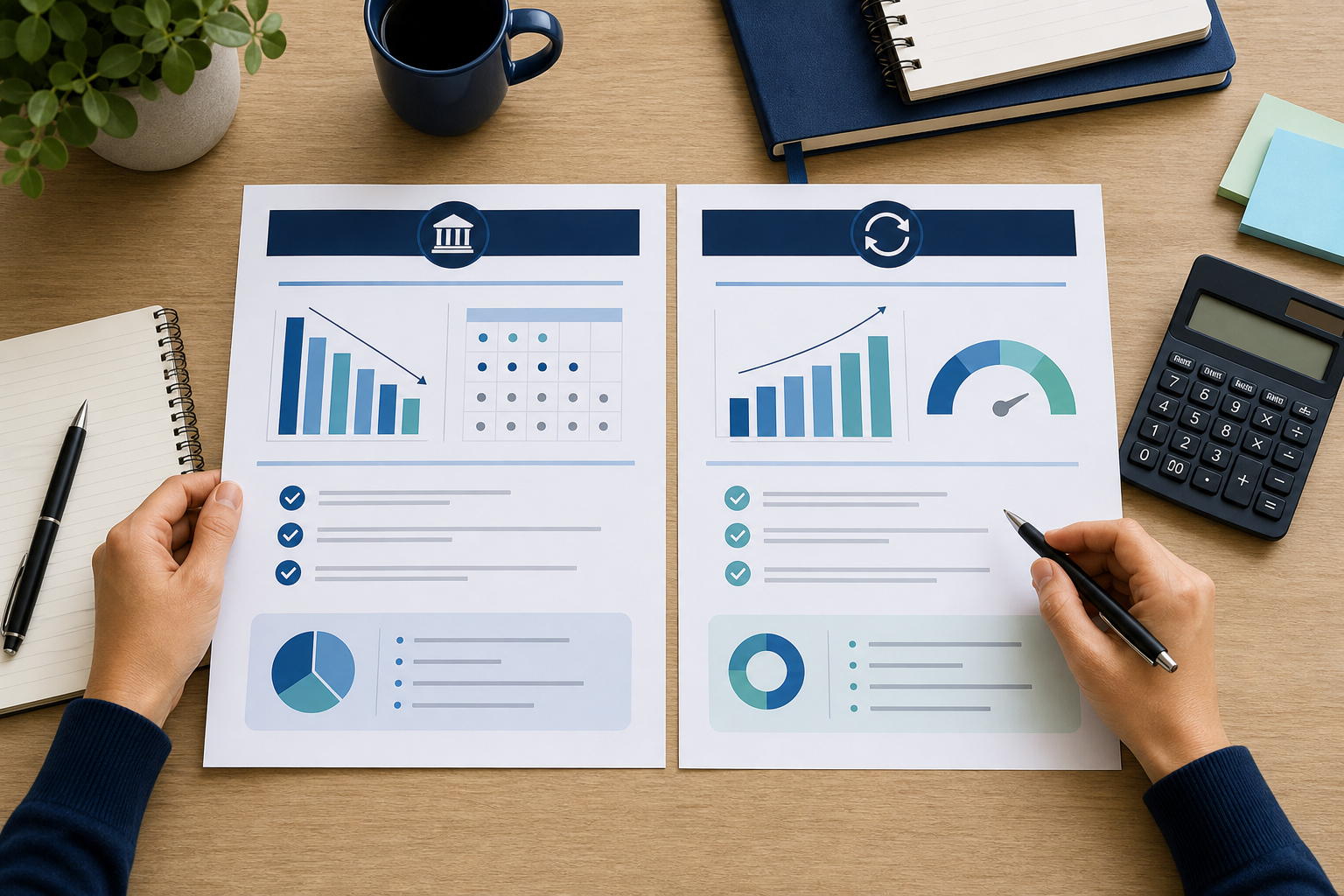
This table is not a recommendation. It is a framework for preparing better questions. A product that fits one business may create unnecessary pressure for another.
Match repayment to cash flow
Repayment fit is often where the real decision shows up. Two options can look similar at first glance but affect operating cash very differently.
Before choosing between a loan and a line of credit, review:
- Average monthly deposits.
- Payroll and contractor obligations.
- Rent, utilities, insurance, taxes, and subscriptions.
- Inventory and supplier timing.
- Existing debt payments.
- Slow seasons or revenue dips.
- Customer payment timing.
- Owner draws or required distributions.
A loan with predictable payments may fit a planned investment if the business can support the schedule. A line of credit may fit a short timing gap if the business expects cash to come in soon. Either option can strain operations if repayment hits before revenue arrives.
The SBA’s guide to managing business finances emphasizes habits like bookkeeping, budgeting, banking, and planning. Those basics are not separate from financing. They are how you understand whether repayment can fit.
Use the spending timeline as a guide
Another helpful question is how long the financed need will last.
For longer-lived needs, a loan may be easier to evaluate. Examples include:
- Equipment expected to support operations for years.
- Renovations or buildouts.
- A defined expansion project.
- Refinancing an obligation into a clearer schedule.
For shorter or repeating needs, a line of credit may be easier to evaluate. Examples include:
- Seasonal inventory purchases.
- Waiting for invoices to be paid.
- Temporary payroll timing gaps.
- Covering supplies before a busy period.
Try to avoid mismatches. Short-term credit can become expensive if used for a long-term investment. Long-term debt can feel heavy if it funds a short-lived expense. The goal is to match the repayment timeline to the business benefit.
Compare cost beyond the headline rate
Cost is not only the advertised rate. The structure matters.
For a business loan, ask:
- What is the total amount repaid over the full term?
- Are there origination, closing, documentation, late, or prepayment fees?
- Is the rate fixed or variable?
- What happens if you repay early?
- Are collateral, liens, or personal guarantees involved?
For a line of credit, ask:
- Are costs charged only on drawn amounts or on the full limit?
- Are there draw fees, maintenance fees, or renewal fees?
- Can the credit limit change?
- What repayment is required after each draw?
- Is the rate fixed or variable?
- What happens if the line is not renewed?
If the provider cannot explain the total cost, fee structure, and repayment behavior in plain language, pause before moving forward. The Federal Trade Commission’s small business guidance is a useful reminder to be cautious with rushed, vague, or unusually broad financing offers.
Prepare before partner or lender review
Whether you explore a business loan or a line of credit, preparation can make the process smoother. It will not guarantee approval, terms, timing, or funding outcomes, but it can reduce avoidable delays.
Gather:
- Legal business name, ownership details, and tax ID.
- Recent bank statements or transaction records.
- Profit and loss statements or revenue summaries.
- Existing debt and payment obligations.
- Requested amount or desired credit limit.
- Funding purpose and timeline.
- Cash-flow notes that explain seasonality or payment timing.
- Questions about total cost, repayment, collateral, and provider responsibilities.
If you need a deeper preparation list, use the related financing application checklist before you apply.
Naverica can help organize application information, send it to financing partners where applicable, and show updates from those partners. Partner review, eligibility decisions, offers, and final terms remain with the relevant provider.
Choose the option that fits the next step
Use this practical decision path:
- Choose a loan-shaped option when the need is defined, the amount is known, and the repayment schedule fits expected cash flow.
- Choose a credit-line-shaped option when the need is flexible, recurring, or seasonal and you can manage draws carefully.
- Pause and revisit the plan when the need is caused by ongoing losses, unclear pricing, or repayment that would crowd out normal operations.
The Federal Reserve’s Small Business Credit Survey is useful context because it tracks financing needs, operating challenges, and credit conditions across small businesses. Broader conditions do not determine the right answer for your business, but they can help explain why preparation and comparison matter.
Keep the comparison practical
The best financing structure is not always the largest amount, the fastest option, or the most familiar name. It is the option that fits the business problem, can be reviewed with accurate information, and leaves enough room for normal operations after repayment begins.
Start with the purpose. Match the repayment pattern to cash flow. Compare total cost and flexibility. Prepare documents before review. Then use the application process to compare real options without relying on promises no responsible provider can guarantee.