
Financial Wellness
Review a Cash Advance Before Payday
Learn how to review a cash advance before payday by checking cost, repayment timing, repeat use, account access, and safer next steps.

A cash advance before payday can feel simple when the need is immediate: cover the gap now, repay when income arrives. The harder question is what the advance does to the next pay cycle.
Before using any short-term cash product, slow the decision down enough to check cost, repayment timing, repeat-use risk, account access, and safer alternatives. This guide is educational, not financial, legal, tax, accounting, credit, or banking advice. It does not guarantee approval, availability, funding, terms, repayment success, savings, credit outcomes, rewards, or payouts.
Start with the reason for the cash advance before payday
Begin by naming the exact gap. A cash advance before payday may be considered for a temporary timing issue, but it is not the same as solving an ongoing budget shortfall.
Write down:
- The bill, expense, or emergency you are trying to cover.
- The amount needed today.
- The next expected income date.
- The income amount you can reasonably count on.
- Required bills due before and after that income arrives.
- Any automatic payments already scheduled around payday.
This step matters because short-term products are often connected to pay-cycle timing. The CFPB’s 2024 Data Spotlight on paycheck advance products describes demand for these products as tied to a mismatch between when income arrives and when expenses are due. That mismatch is real for many households, but the product still needs to fit the repayment date and the next set of bills.
If the gap is likely to repeat every pay cycle, treat that as a separate planning problem. A one-time advance may not help if the repayment makes the next payday short in the same way.
Compare the full cost, not just the amount received
The amount deposited or made available is only one part of the decision. Review every cost that could apply before you accept.
Check for:
- Express or instant transfer fees.
- Subscription or membership fees.
- Optional tips or voluntary payments.
- Late, failed payment, or returned payment fees.
- Costs tied to a card, payment method, or account.
- Any fee that changes based on transfer speed or repayment timing.
Small fees can be easy to overlook when the amount borrowed is also small. The CFPB’s paycheck advance report found that many workers using employer-partnered earned wage products paid a fee, often for expedited access. It also explained that APR comparisons can change sharply based on the advance amount, fee, and number of days until repayment.
You do not need to turn every decision into a complex spreadsheet. You do need one plain answer: “How much will this cost me in dollars, and when will that money leave my account?”
Map repayment against the next pay cycle
A cash advance before payday should be reviewed as two dates, not one. The first date is when money becomes available. The second is when repayment happens.
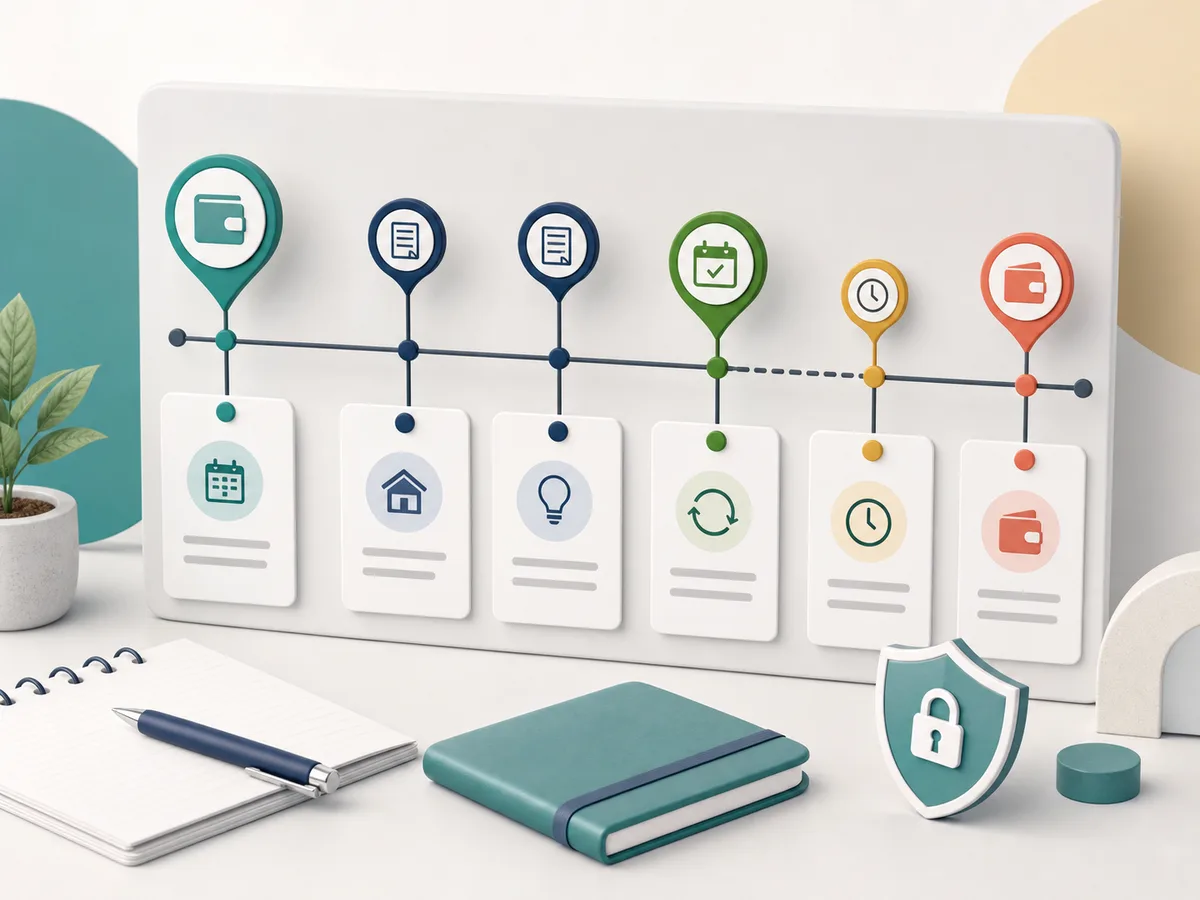
Create a quick timeline:
| Timeline item | What to write down | Why it matters |
|---|---|---|
| Today | Available cash and urgent expense | Shows the immediate gap |
| Before payday | Bills, subscriptions, food, gas, childcare, rent, or utilities | Shows whether the advance covers only one pressure point |
| Payday | Expected income and possible timing delays | Shows what repayment depends on |
| Repayment date | Amount, method, and whether repayment is automatic | Shows when the next account drop may happen |
| After repayment | Bills due in the following week | Shows whether the next cycle becomes tight |
The CFPB’s payday loan overview explains that payday loans are typically short-term and often due on the next payday, with repayment sometimes made through an electronic debit authorization. Not every cash advance product is a payday loan, and product structures vary. The practical lesson is still useful: know the repayment date and method before you rely on the money.
If repayment is automatic, make sure the expected account will have enough available after rent, utilities, food, transportation, and other essentials. A repayment that clears successfully can still create pressure if it leaves too little for the rest of the week.
Watch for repeat use
Using an advance once and using one every pay cycle are different situations. Repeat use can make the product feel like part of income, even though it is really moving money from a future paycheck into the present.
Ask:
- Have I used an advance recently?
- Did the last repayment make the next week harder?
- Am I using advances for the same bill or category each time?
- Would a smaller expense change, due-date review, payment plan, or reminder help more?
- Am I counting rewards or uncertain income as if they are guaranteed?
The Federal Reserve’s 2025 report on the economic well-being of U.S. households in 2024 found that 63 percent of adults said they would cover a hypothetical $400 emergency expense using cash or its equivalent. That broad measure does not describe every household, but it shows why even modest timing gaps can matter when cash buffers are limited.
If repeat use is becoming normal, shift the focus from “How do I get through today?” to “What keeps making this week tight?” That may point to recurring charges, irregular income, bill timing, transportation costs, childcare, debt payments, or a missing buffer goal.
Review account access and privacy
Some cash advance or paycheck advance products may ask to review income, employment, payroll, bank account activity, or other financial information. Before sharing information, understand what the provider is asking for and why.
Check:
- What information is being requested.
- Whether the request is expected for that product.
- Whether the connection or document upload is happening through a secure path.
- How repayment will be collected.
- How to revoke or change permissions if the product allows it.
- Where to get account-specific help without sending private data through email or chat.
Naverica’s financial wellness resources are designed for planning visibility, such as connected account review, transaction summaries, budgets, goals, reminders, pay-cycle settings, and insights. These tools can help users review patterns and prepare next steps. They are not banking custody, underwriting, credit repair, or financial advice.
If a question involves your account, connected account details, cash advance status, rewards activity, consent choices, security settings, documents, or other private information, use secure Naverica support paths instead of public comments, social messages, or email threads that include sensitive details.
Slow down if the offer feels pressured
Urgency is a red flag when money is tight. A real provider should give you time to review cost, repayment, permissions, and support information.
Pause if you see:
- Guaranteed approval language before review.
- Pressure to decide immediately.
- A request for upfront payment through gift cards, cryptocurrency, wire transfer, or payment apps.
- Instructions to hide the transaction from a bank, employer, spouse, or advisor.
- A link from an unexpected text or email asking for sign-in credentials.
- Terms that are hard to find or that change during the process.
The FTC’s guide on how to avoid a scam recommends resisting pressure, checking the story, and avoiding unusual payment demands. For cash advance decisions, the same habit applies: use official channels, verify the provider, and do not share passwords, one-time codes, full account numbers, or private documents through an unexpected message.
Keep rewards separate from bill money
Rewards can be useful when they are treated as a possible extra, not as the foundation for repayment or required bills.
Naverica Rewards depend on participating partners and program rules. Rewards credits are not bank balances, deposits, wages, or guaranteed income. Current rewards may cash out only through approved PayPal or bank draft options when available and eligible. Rewards are not currently applied to Cash Advances or subscriptions.
If rewards appear in your plan, keep them separate from rent, utilities, repayment, groceries, transportation, childcare, and other essentials. A pending reward, possible payout, or partner activity should not be the reason a repayment appears affordable.
Consider lower-pressure next steps first
Before accepting a cash advance before payday, review whether a lower-pressure step could solve the same problem.
Depending on the situation, that might mean:
- Asking a biller whether a due-date change or payment plan is available.
- Cancelling or pausing an optional recurring charge.
- Moving a nonessential purchase to the next pay cycle.
- Setting a reminder before the next renewal or automatic payment.
- Using a small emergency buffer if one is available.
- Reviewing whether the expense is one-time or likely to repeat.
- Comparing the product cost with other available options.
The CFPB’s Your Money, Your Goals toolkit includes practical tools for tracking income, bills, spending, debt, and cash flow. You do not need to use that toolkit specifically to make a better decision. The useful idea is to put income and expenses on the same timeline before choosing a product.
Naverica’s cash advance page explains that Cash Advance is currently paused while the active product experience focuses on financial wellness and rewards. Naverica does not lend its own capital, make partner underwriting decisions, guarantee cash advance availability, or promise any specific approval, funding, repayment, savings, reward, payout, or credit outcome. Availability, terms, timing, repayment, and provider decisions can vary by provider rules, eligibility, consent, state availability, and law.
Use a five-question review before you decide
Use this short checklist before moving forward:
- What exact expense am I covering, and is it urgent?
- What is the full dollar cost, including speed, subscription, tip, payment, or failed-payment fees?
- When will repayment happen, and what bills are due right after it?
- What account, payroll, employment, or income information am I being asked to share?
- Is this a one-time timing gap, or is the same shortfall likely to return next payday?
If any answer is unclear, pause and get clarity before accepting. If the answer shows that the next pay cycle will become harder, the advance may not fit the current situation even if it solves today’s gap.
Make the next payday easier to see
A cash advance before payday is not only a question about getting money quickly. It is a question about what happens after the money arrives, after repayment, and after the next set of bills comes due.
Start with the reason for the gap. Compare the full cost. Map repayment against the next pay cycle. Watch for repeat use. Protect private information. Keep rewards separate from required bill money. Then decide whether the product, a different option, or a planning step is the calmer next move.
No checklist can guarantee an outcome. But a clear review can make the tradeoff visible before payday pressure turns into a rushed decision.